How to Choose Recurring Billing Software
Recurring billing software is evaluated on how it handles failed payments, plan changes, and processor flexibility rather than on how the checkout page looks.
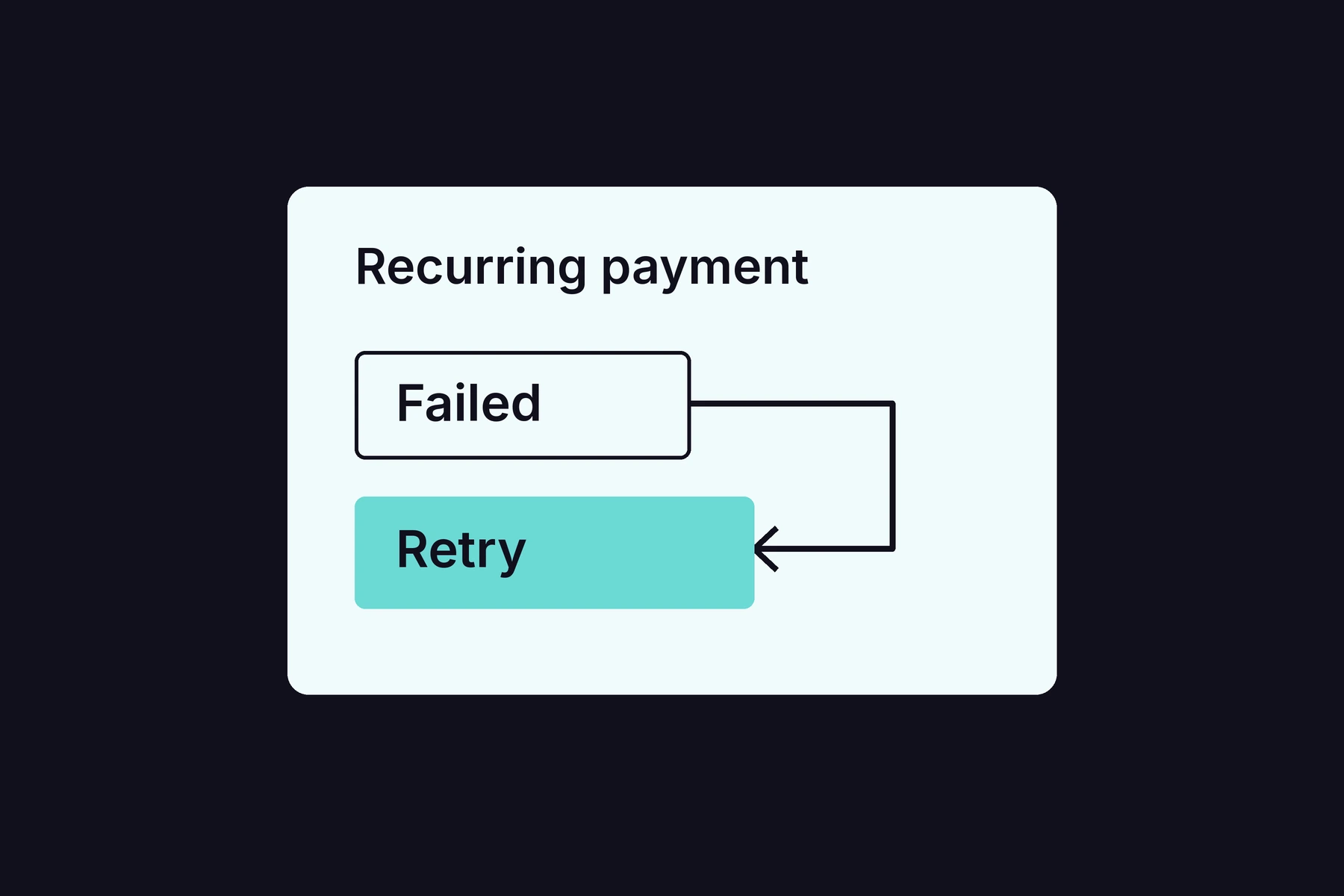
Recurring billing software is evaluated on how it handles failed payments, plan changes, and processor flexibility rather than on how the checkout page looks. Involuntary churn from declined cards is the largest recoverable leak in most subscription businesses, and dunning logic addresses it.
What Are the 7 Evaluation Criteria?
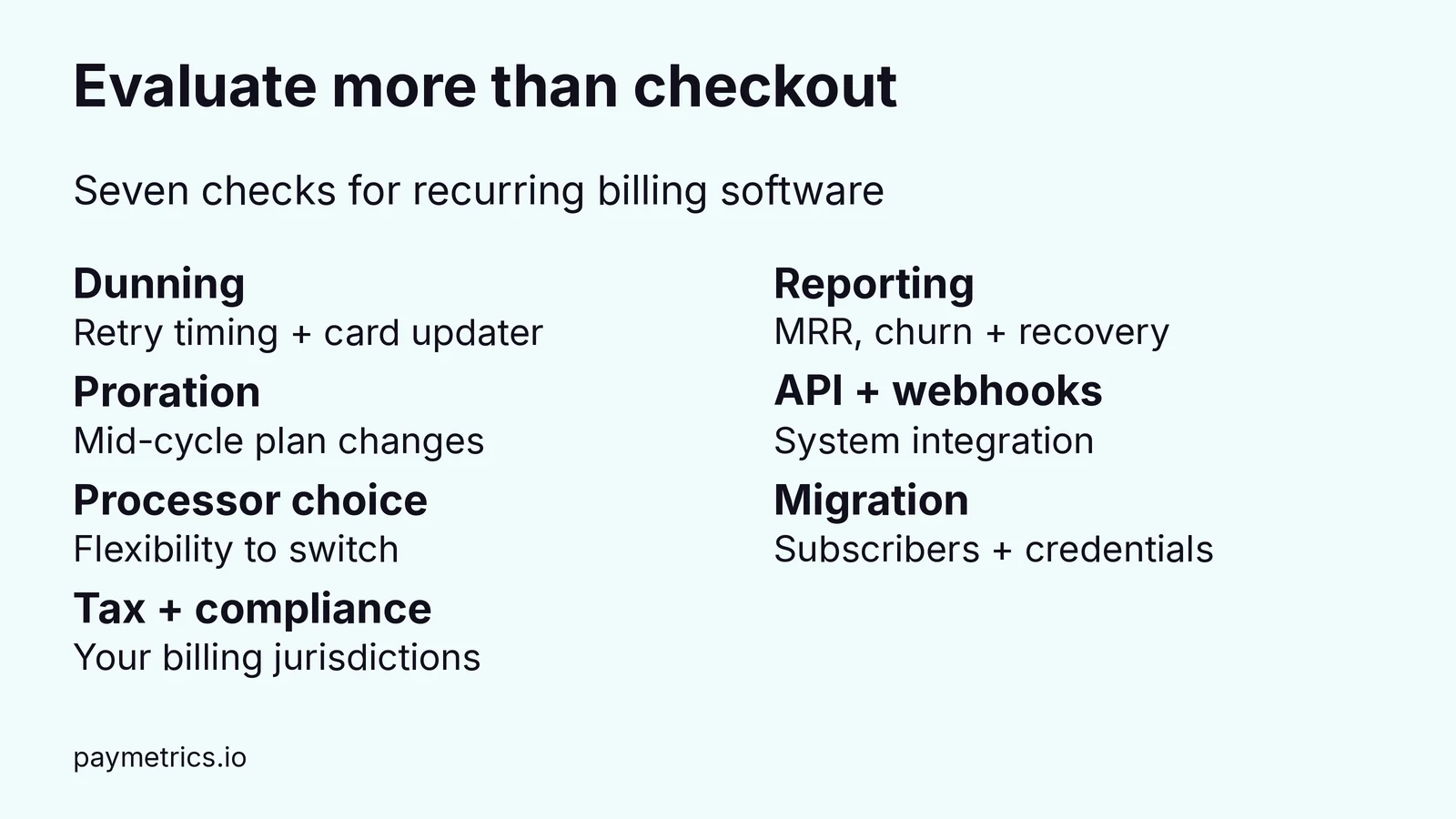
Judge every platform against the same 7 points.
- Dunning logic, including retry timing and card updater support.
- Proration handling for mid-cycle upgrades and downgrades.
- Processor flexibility, so you are not locked to one acquirer.
- Tax and compliance handling across the jurisdictions you bill.
- Reporting on MRR, churn, and recovery rate.
- API depth and webhook coverage for your own systems.
- Migration path for existing subscribers and stored credentials.
Why Does Dunning Matter Most?
Dunning is the automated sequence that runs when a recurring charge fails, and a large share of subscription cancellations are expired or reissued cards rather than decisions. Four capabilities separate strong dunning from weak dunning.
- Intelligent retry timing rather than fixed daily attempts.
- Account updater integration that refreshes reissued card numbers.
- Customer-facing emails with a self-service update link.
- Configurable grace periods before access is revoked.
What Is an Account Updater?
Account updater is a card network service that automatically refreshes stored card details when an issuer reissues a card. Without it, every reissued card becomes a failed payment and a support ticket.
What Does Processor Flexibility Buy You?
Platforms that lock you to a single processor remove your ability to renegotiate rates or switch on service problems. Two things to confirm before signing.
- Whether the platform supports multiple acquirers or is a closed loop.
- Whether stored credentials are portable if you leave.
Why Does Portability Matter?
Credential portability catches subscription businesses late. A platform holding non-portable tokens can make migration expensive enough to be unrealistic, which turns a software decision into a permanent one.
How Should Proration Work?
Proration determines what a customer is charged when they change plans mid-cycle. Ask how the platform handles 3 specific cases.
- Upgrades mid-cycle, and whether the charge is immediate or deferred.
- Downgrades, and whether credit is issued or applied forward.
- Cancellations, and whether access ends immediately or at period end.
What Happens If It Only Supports One Model?
Platforms that handle a single proration model force your pricing to fit their software rather than your business. That constraint surfaces the first time you launch a new plan tier.
What Questions Expose a Weak Platform?
Five questions surface limitations that demos do not.
- What is your recovery rate on failed payments, and how is it measured?
- Which acquirers do you support today?
- Are stored credentials portable on exit?
- How are mid-cycle plan changes prorated?
- What does migration of existing subscribers involve?
How Does This Connect to Your Processing Setup?
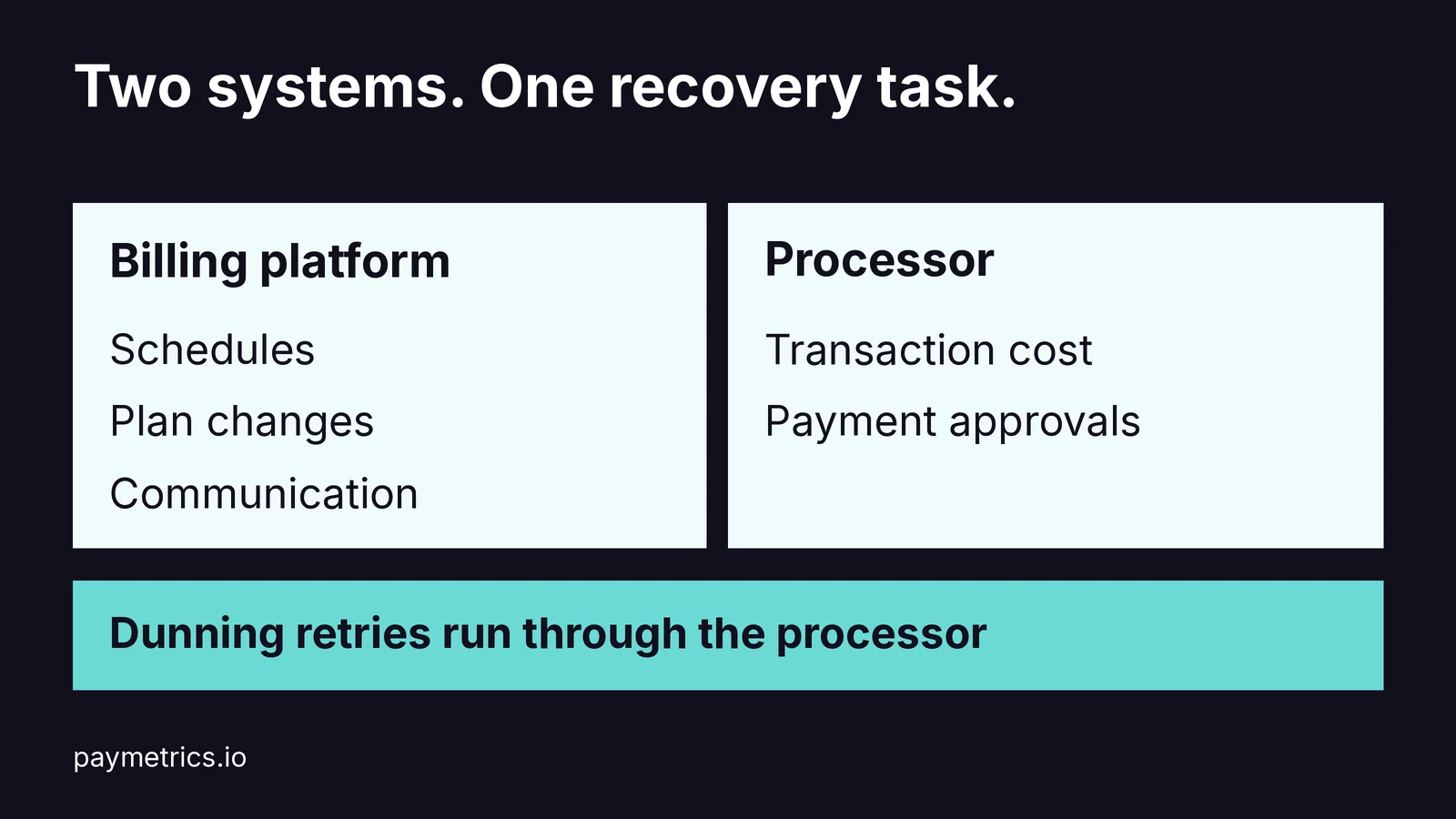
Billing software and payment processing are separate decisions that interact. Three responsibilities split between them.
- The billing platform manages schedules, plan changes, and customer communication.
- The processor determines cost per transaction and approval rates.
- Dunning success depends on both, since retries run through the processor.
Where to Read Next
Background on the billing model is in what is recurring billing, and setup is covered in how to set up automatic payments. Our recurring billing solution covers the processing side.
Frequently Asked Questions
Do you need separate billing software and a payment gateway?
Many platforms bundle both, and separating them gives more processor flexibility at the cost of added integration work. The right answer depends on volume and how much you expect to renegotiate.
How much does recurring billing software cost?
Pricing models include flat monthly fees, per-subscriber fees, and a percentage of billed revenue. Percentage models get expensive as you scale, so model the cost at your projected volume rather than your current one.
What is involuntary churn?
Involuntary churn is subscriber loss caused by failed payments rather than a cancellation decision. It is recoverable through dunning and account updater, which is why those features carry the most weight.
Can you migrate subscribers between platforms?
Yes, though it depends on whether stored payment credentials are portable. Confirm portability in writing before committing, since a non-portable platform makes future migration prohibitively expensive.
Table of Contents
Subscribe to our newsletter
Get the latest insights and updates delivered to your inbox.

What Are Interchange Fees and Who Sets Them?
Learn who sets interchange fees, which cost layers are negotiable, and how transaction data and settlement timing affect qualification.
What Is a Chargeback? A Merchant’s Guide
Learn how chargebacks differ from refunds, how the dispute process works, and which evidence and prevention controls protect merchants.
What Is a Payment Gateway? An Explainer From the Team That Configures Them Every Day
Learn what a payment gateway does during checkout, how it protects data, routes transactions, stores tokens, and adds cost.