How to Prevent Chargebacks: 9 Merchant Controls
Most chargebacks are preventable, because most of them start as a customer problem rather than fraud.
Most chargebacks are preventable, because most of them start as a customer problem rather than fraud. The first can be fixed this week and removes a meaningful share of disputes on its own.
Control 1: Fix Your Billing Descriptor
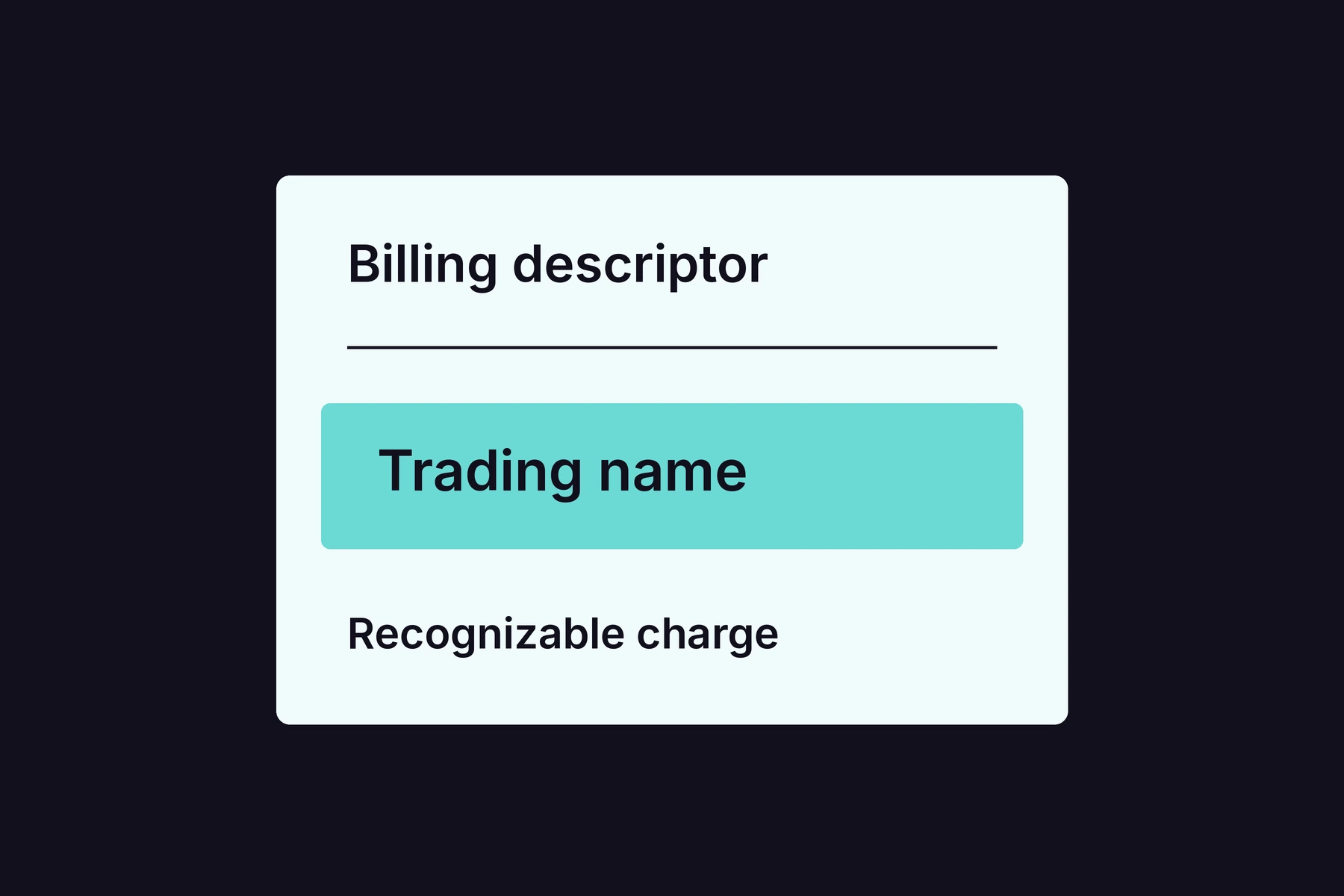
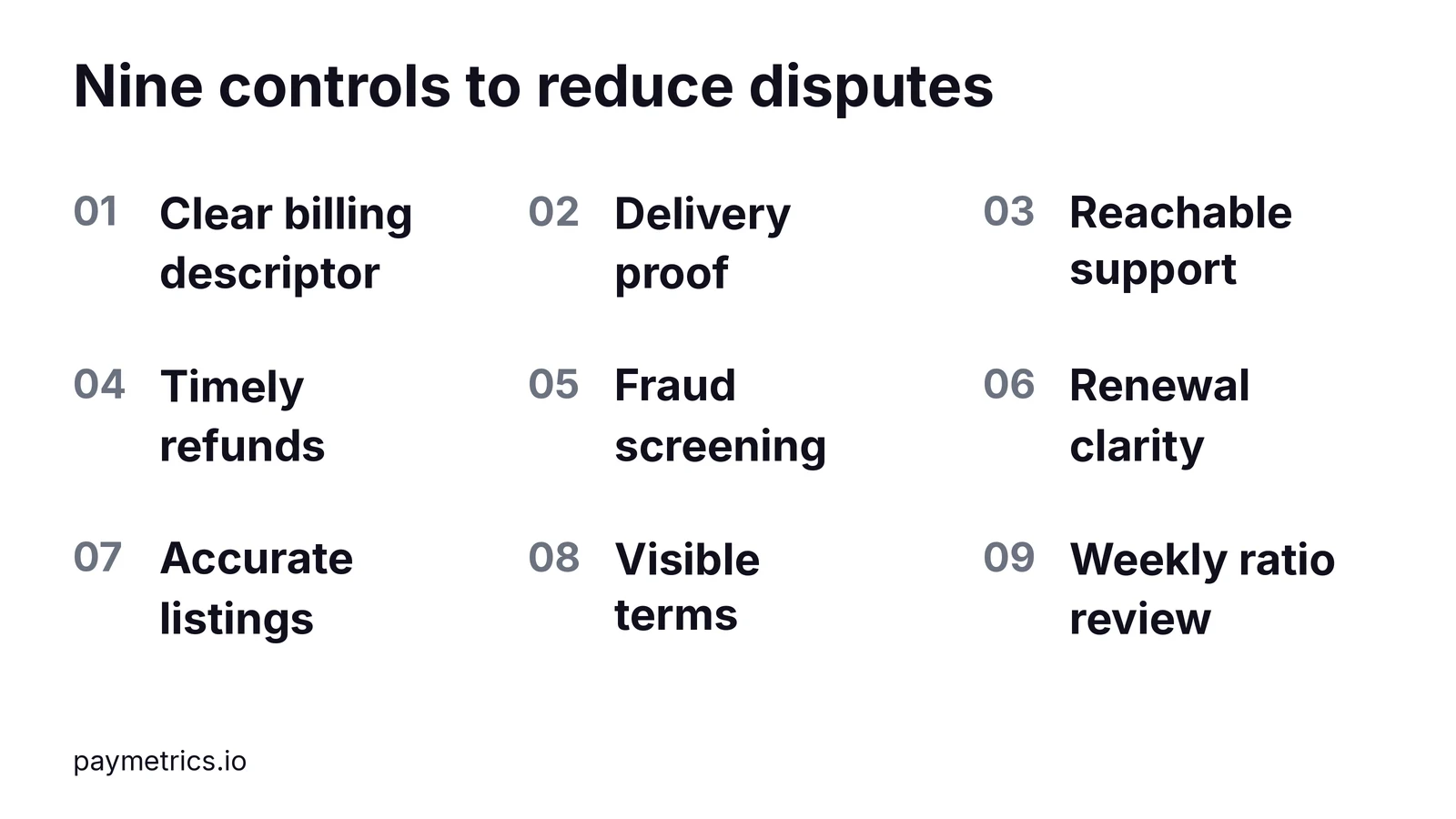
Your billing descriptor is the text a cardholder sees on their statement, and an unrecognizable descriptor is the single most common cause of disputes filed in error. Use your trading name rather than a holding company, and include a phone number where the character limit allows.
Control 2: Capture Delivery Confirmation
Signature or tracking confirmation decides goods-not-received disputes. Require it on every shipment above a defined value and store it against the order.
Control 3: Respond to Support Faster Than the Bank
Customers contact their bank when they cannot reach you. Three practices close that gap.
- Publish a support number and email visibly at checkout and in confirmations.
- Answer within one business day, every time.
- Empower frontline staff to issue refunds without escalation.
Control 4: Refund Before They Dispute
A refund costs the sale. A dispute costs the sale, the fee, the shipped goods, and the ratio. Cost breakdown is in what is a chargeback fee.
Control 5: Screen Card-Not-Present Transactions
Fraud screening blocks the disputes that documentation cannot win. Four checks cover most exposure.
- AVS matching on billing address.
- CVV verification on every keyed transaction.
- 3D Secure on higher-risk orders.
- Velocity limits on repeated attempts from one source.
Control 6: Make Recurring Billing Predictable
Subscription disputes cluster around charges customers forgot about. Send a renewal notice several days ahead, confirm each charge by email, and make cancellation a self-service action rather than a phone call.
Control 7: Describe Products Accurately
Not-as-described disputes trace back to the listing. Accurate photos, honest dimensions, clear delivery windows, and stated limitations prevent a category of dispute that representment rarely wins.
Control 8: Publish Terms Customers Actually See
Refund, cancellation, and shipping terms need an affirmative acceptance at checkout with a timestamp. Terms buried in a footer link carry far less weight as representment evidence.
Control 9: Monitor Your Ratio Weekly
Four numbers reviewed weekly catch problems while they are still small: dispute count, dispute ratio, reason code distribution, and win rate. Reason code distribution is the diagnostic one, since it names which control is failing.
Which Controls Work Fastest?
Descriptor changes and support responsiveness produce results within one billing cycle. Fraud screening and delivery confirmation take effect as new orders flow through. Terms and product accuracy work slowly but reduce the disputes that are hardest to fight.
What Happens When a Dispute Still Arrives
What Happens When a Dispute Still Arrives
Disputes that still arrive need an evidence workflow and a named owner. Disputes that still arrive are easier to win on authenticated transactions, since the issuer holds liability on fraud claims. That mechanism is covered in what is 3D Secure.
How Do You Build This Into Daily Operations?
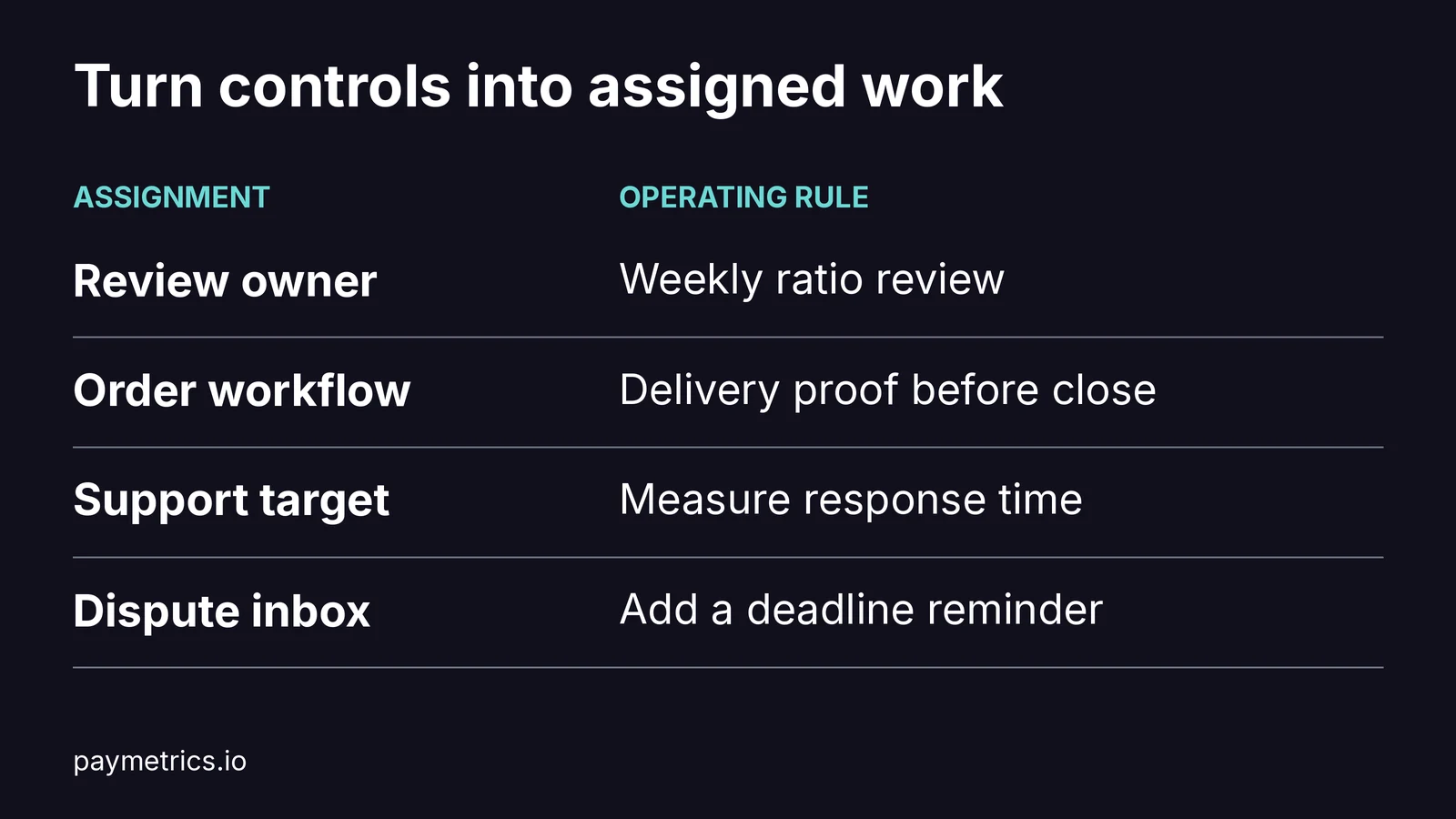
Controls fail when they live in a document rather than a workflow. Four assignments make the set stick.
- Give one person ownership of the weekly ratio review.
- Add delivery confirmation as a required field before an order closes.
- Set a support response target and measure against it.
- Route every dispute notification to a named inbox with a deadline reminder.
Representment deadlines are short and unforgiving, so the reminder matters as much as the evidence.
What About Friendly Fraud?
A portion of disputes come from customers who received exactly what they ordered. These cases are won with documentation rather than prevented with policy, and the operational view appears in why chargebacks and declines are operational problems.
Background on the Dispute Process
Background on the Dispute Process
Background on the dispute process itself is in what is a chargeback.
Frequently Asked Questions
How long does it take to see fewer chargebacks?
Disputes lag the transactions that caused them by 30 to 90 days, so improvements show up a full quarter after the fix. Track by transaction date rather than dispute date to see the effect sooner.
Does 3D Secure shift liability?
For most card-not-present fraud disputes, an authenticated 3D Secure transaction shifts liability to the issuer. Coverage varies by card network and transaction type, so confirm scope with your provider.
What dispute ratio should you target?
Keep the ratio below 0.9% of monthly transactions, since that is where Visa’s monitoring program begins.
Table of Contents
Subscribe to our newsletter
Get the latest insights and updates delivered to your inbox.

How to Read a Merchant Statement: A Line-by-Line Analysis
Review a merchant statement line by line, calculate the effective rate, identify padded fees, and turn the findings into savings.
What Is a Payment Facilitator (PayFac)?
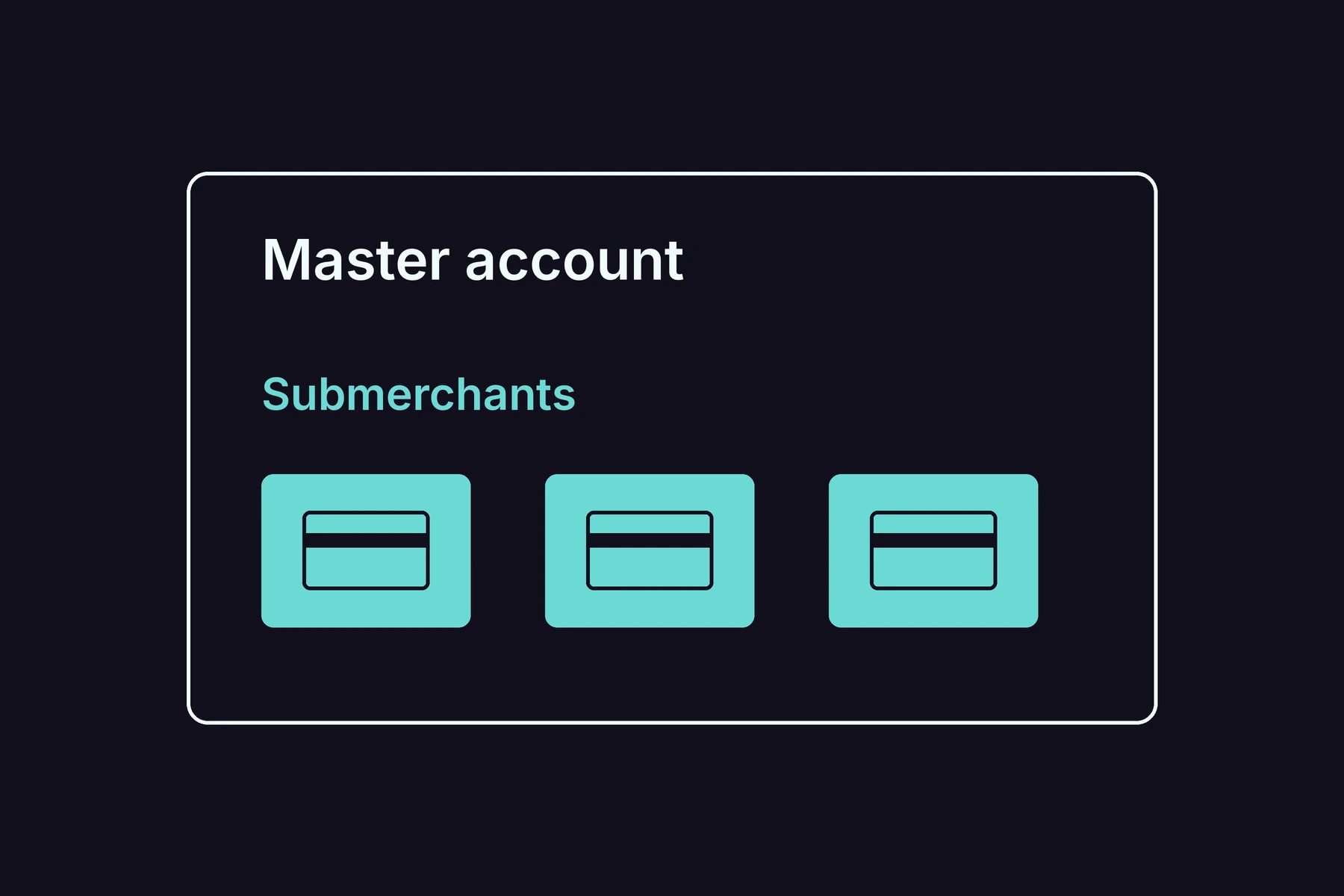
A payment facilitator, commonly shortened to PayFac, is a company that holds a master merchant account and onboards other businesses as submerchants underneath it.

How to Calculate Credit Card Processing Fees: The 3-Step Method We Use on Every Statement Audit
Calculate your effective processing rate in three steps, compare healthy ranges, and find hidden costs on merchant statements.