What Is a Chargeback Fee and Who Pays It?
A chargeback fee is an administrative charge assessed to the merchant every time a cardholder disputes a transaction.
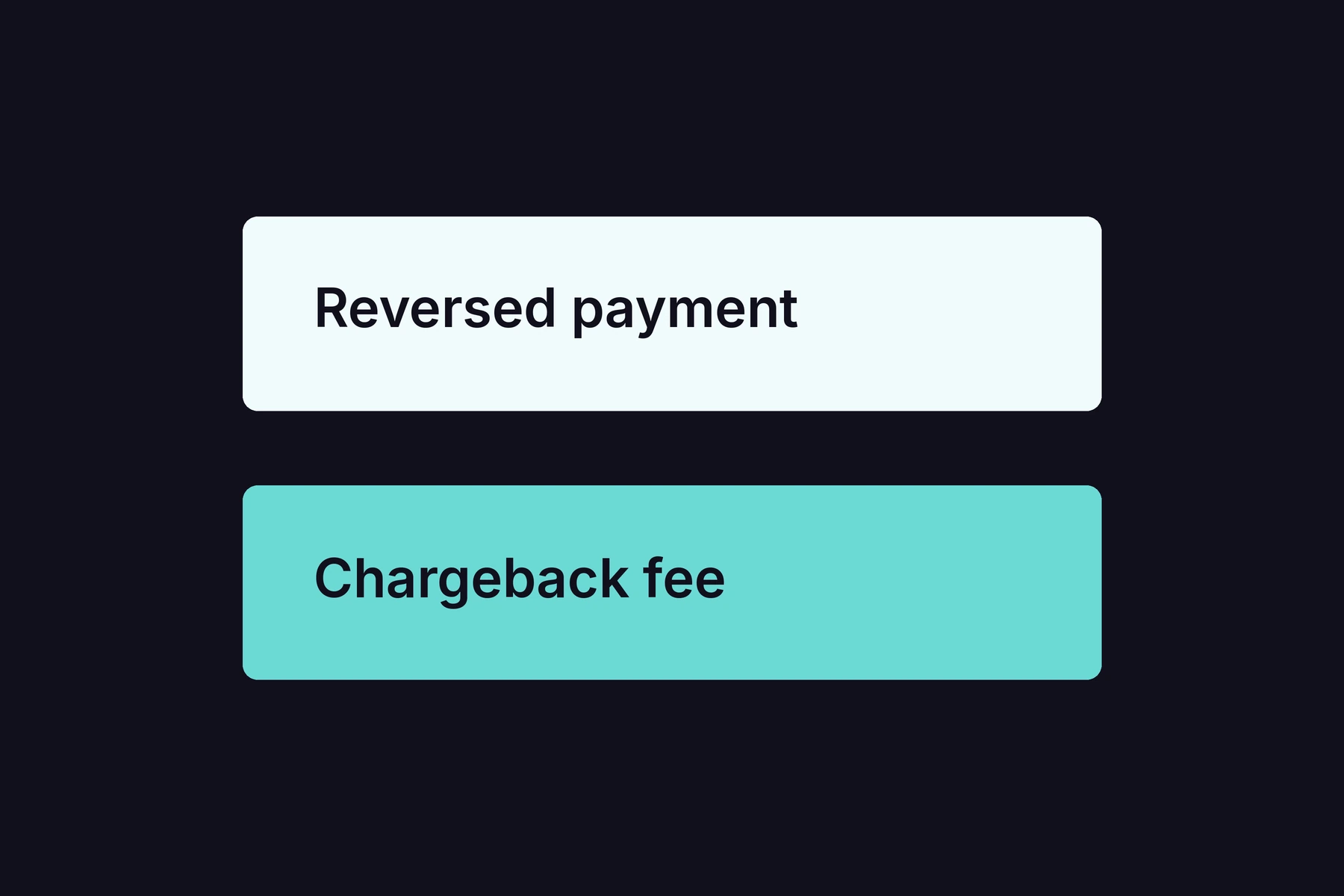
A chargeback fee is an administrative charge assessed to the merchant every time a cardholder disputes a transaction. The fee applies whether the merchant wins or loses, which most operators discover only after their first representment win.
How Much Is a Chargeback Fee?
Chargeback fees commonly range from $15 to $100 per dispute, set by the acquiring bank rather than the card network. Four factors move the number.
- Industry risk classification assigned to the merchant.
- Processing volume and account history.
- Current dispute ratio.
- Whether the account is domestic or offshore.
High-risk accounts sit at the top of the range, and some agreements raise the fee once monthly dispute counts cross a threshold.
Who Actually Charges the Fee?
The acquiring bank assesses the fee and debits it from the merchant account, usually in the same settlement cycle as the disputed amount. Card networks set the dispute rules but do not collect this particular charge.
Is the Fee Refunded If You Win?
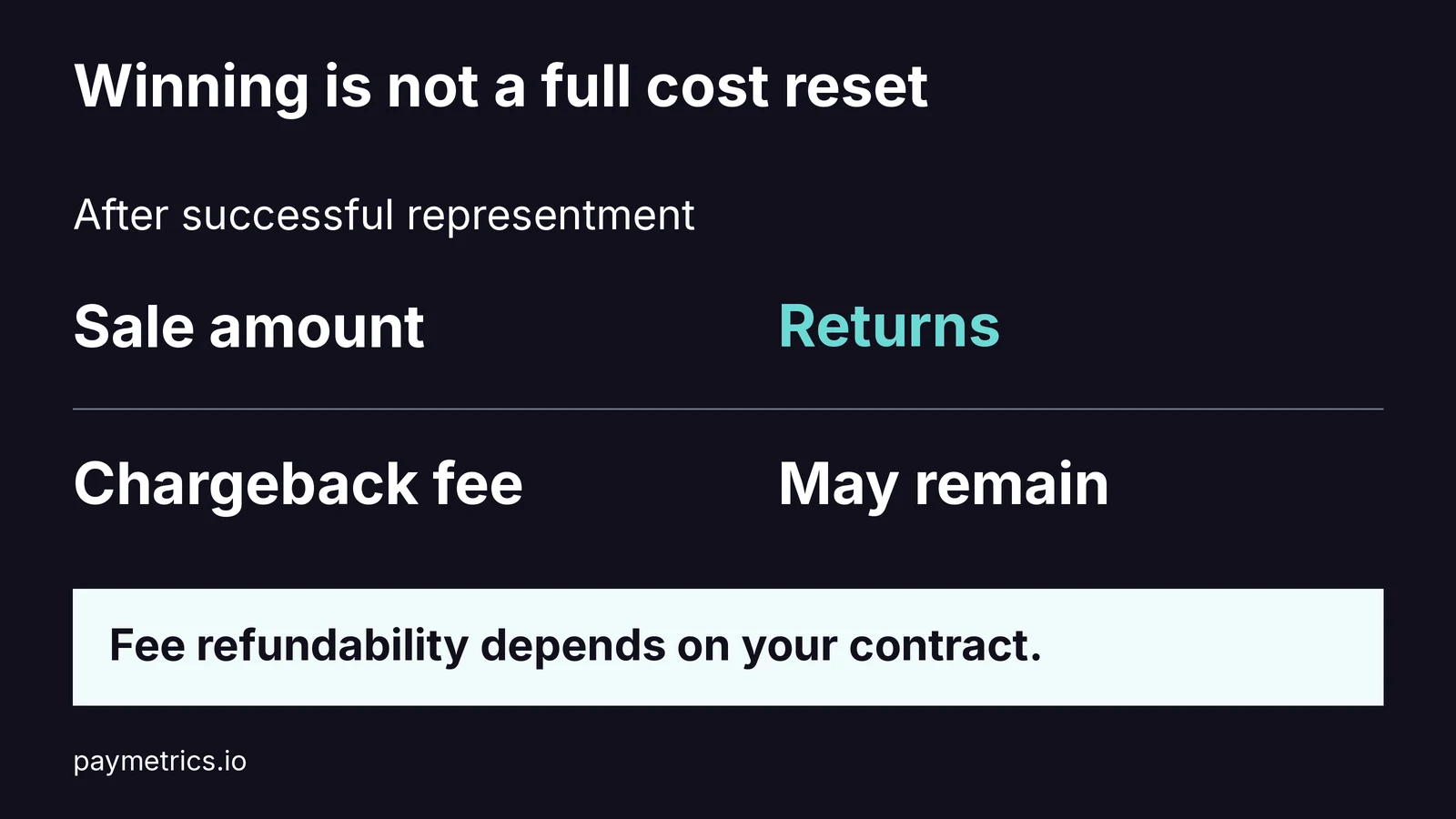
No. The disputed transaction amount returns to the merchant on a successful representment, but the fee stays gone. That asymmetry is why prevention outperforms fighting disputes on pure economics.
What Costs Stack on Top of the Fee?
The fee is the smallest line in the total cost of a dispute. Four costs accumulate on every case.
- The reversed transaction amount.
- The chargeback fee itself.
- The cost of goods already shipped and unrecoverable.
- Staff time assembling representment evidence.
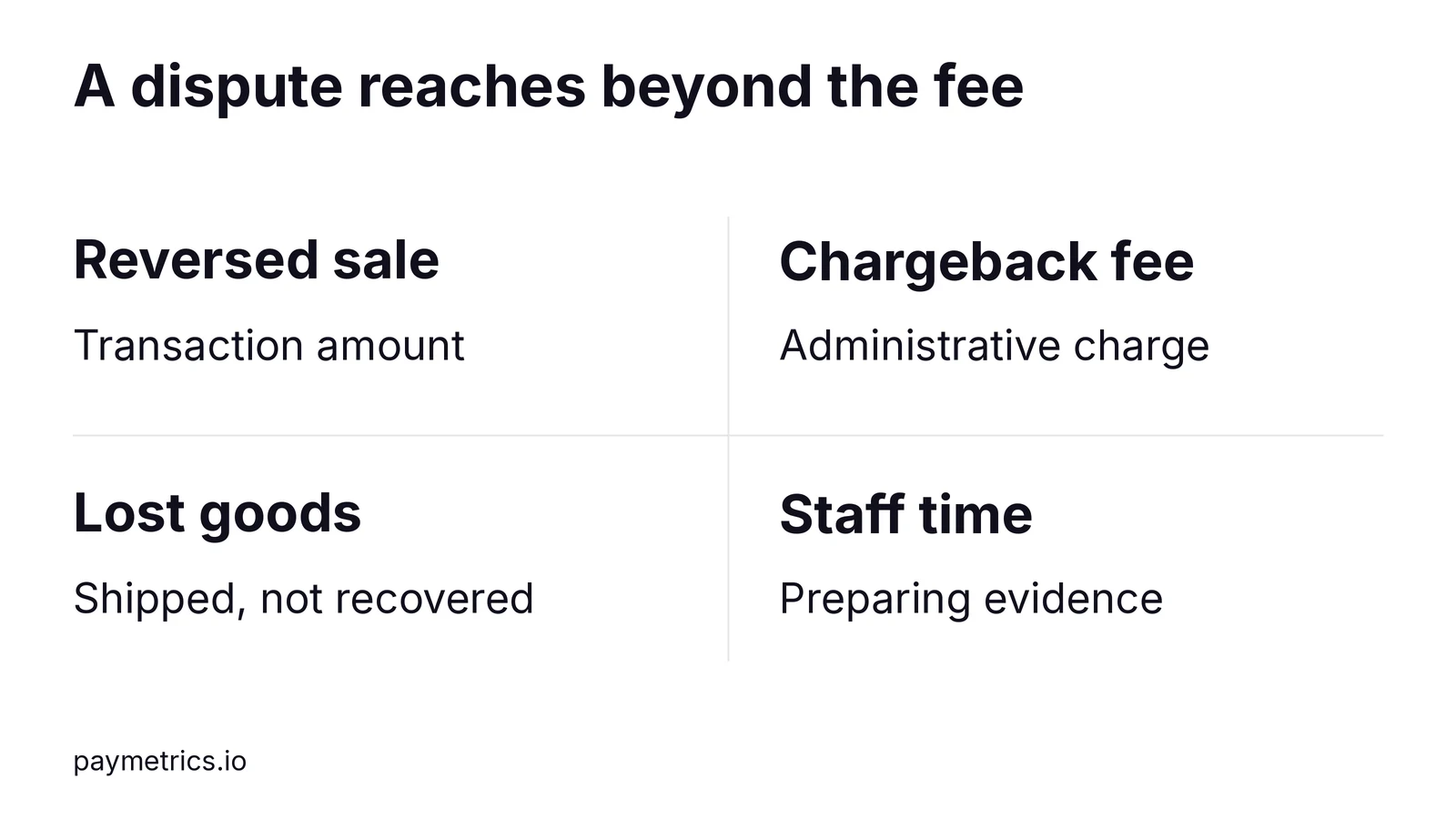
A $60 order with a $25 fee costs far more than $85 once the product and the labor are counted. Full cost context appears in how much are credit card processing fees.
What Happens as Dispute Volume Rises?
Fees escalate with volume in two ways. Some acquirers raise the per-dispute fee once a merchant crosses a defined ratio, and monitoring program enrollment adds separate network fines on top. Three consequences follow for merchants trending upward.
- Per-dispute costs increase while the underlying problem remains unfixed.
- Reserve requirements may be imposed against future deposits.
- Account termination becomes a live risk at sustained excessive ratios.
How Do You Reduce What You Pay?
Reducing total fee spend means reducing dispute count, since the per-unit fee is rarely negotiable below a floor. Five controls carry most of the effect.
- Use a billing descriptor customers recognize on a statement.
- Capture delivery confirmation on every shipment.
- Respond to support inquiries before customers escalate to the bank.
- Send clear pre-billing notices on recurring charges.
- Issue refunds promptly when a complaint is legitimate.
The refund point is counterintuitive but reliable. A refund costs the sale. A chargeback costs the sale, the fee, the product, and the ratio.
Where to Find the Full Control Set
Where to Find the Full Control Set
The full control set is covered in how to prevent chargebacks, and the mechanics of the dispute itself are explained in what is a chargeback.
Should You Fight Every Dispute?
No. Representment makes economic sense when the transaction value exceeds the combined fee and labor cost, and when documentation is strong. Low-value disputes with thin evidence are usually cheaper to accept.
Should You Set a Dispute Threshold?
Should You Set a Dispute Threshold?
Building a threshold into your process, rather than deciding case by case, keeps staff time proportional to what is recoverable. Merchants in a high-risk category face steeper fees on every case, which raises the threshold worth fighting.
Frequently Asked Questions
Can you pass the chargeback fee to the customer?
No. Card network rules prohibit passing dispute fees to cardholders, and attempting it creates a compliance problem alongside the original dispute.
Are chargeback fees negotiable?
The per-dispute fee is negotiable at contract renewal, particularly for merchants with volume and a low ratio. Merchants already in a monitoring program have little leverage until the ratio improves.
Do refunds carry a chargeback fee?
No. A refund is a merchant-initiated reversal and carries no dispute fee. This is the core reason to resolve complaints directly before they reach an issuing bank.
Is the fee charged per dispute or per stage?
Most acquirers charge once per dispute case. Escalation to pre-arbitration or arbitration can trigger additional fees, and arbitration in particular carries network charges well above the initial amount.
Table of Contents
Subscribe to our newsletter
Get the latest insights and updates delivered to your inbox.
How to Choose Recurring Billing Software
Recurring billing software is evaluated on how it handles failed payments, plan changes, and processor flexibility rather than on how the checkout page looks.

What Are Interchange Fees and Who Sets Them?
Learn who sets interchange fees, which cost layers are negotiable, and how transaction data and settlement timing affect qualification.

How Long Do Credit Card Refunds Take to Process? What We See on Both Sides of the Transaction
See how long credit card refunds take, where delays happen, and what merchants can do to set clearer customer expectations.