What Is 3D Secure and Should You Enable It?
3D Secure is an authentication protocol that verifies a cardholder’s identity during online checkout before the transaction is authorized.
3D Secure is an authentication protocol that verifies a cardholder’s identity during online checkout before the transaction is authorized. Its commercial value is liability shift: when an authenticated transaction is disputed as fraud, the issuer absorbs the loss instead of the merchant.
How Does 3D Secure Work?
The protocol adds an authentication step between checkout and authorization. Four parties exchange data in that step.
- The merchant’s gateway sends transaction and device data to the card network.
- The network routes the request to the card issuer.
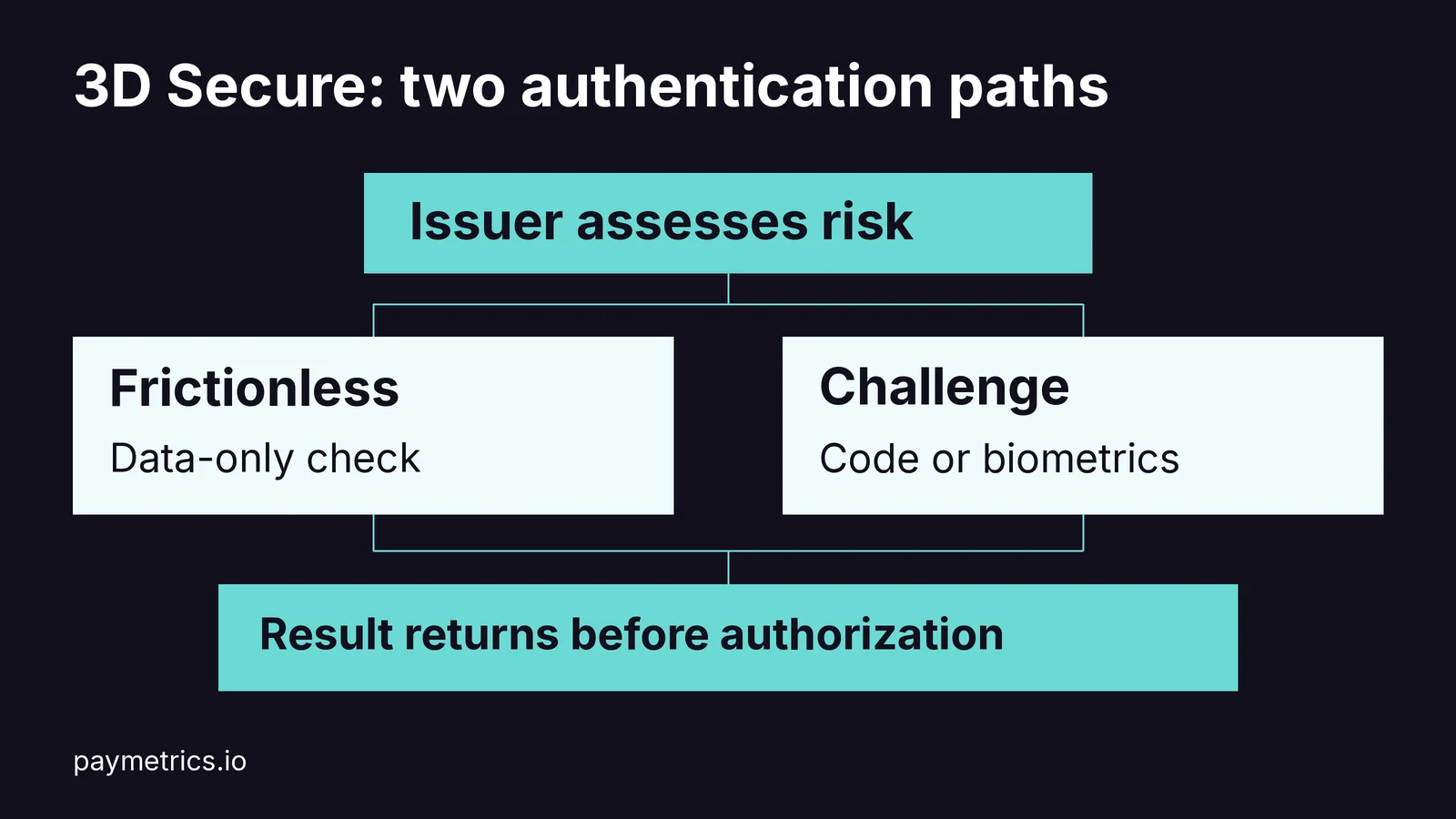
- The issuer scores the risk and either approves silently or challenges the customer.
- The result returns to the gateway, which then submits the authorization.
The whole exchange usually completes in under 2 seconds.
What Changed With 3D Secure 2?
The original version challenged nearly every transaction with a password page and cost real conversion. The second version fixed that with risk-based authentication. Three changes matter commercially.
- Over 100 data points are passed to the issuer, enabling silent approval.
- Most transactions clear without any customer interaction.
- Challenges use biometrics or one-time codes rather than static passwords.
What Is Frictionless Flow?
Frictionless flow is the path where the issuer approves on the data alone and the customer sees nothing. The large majority of 3DS2 transactions resolve this way, which is why the conversion objection to the original protocol no longer holds.
How Does Liability Shift Work?
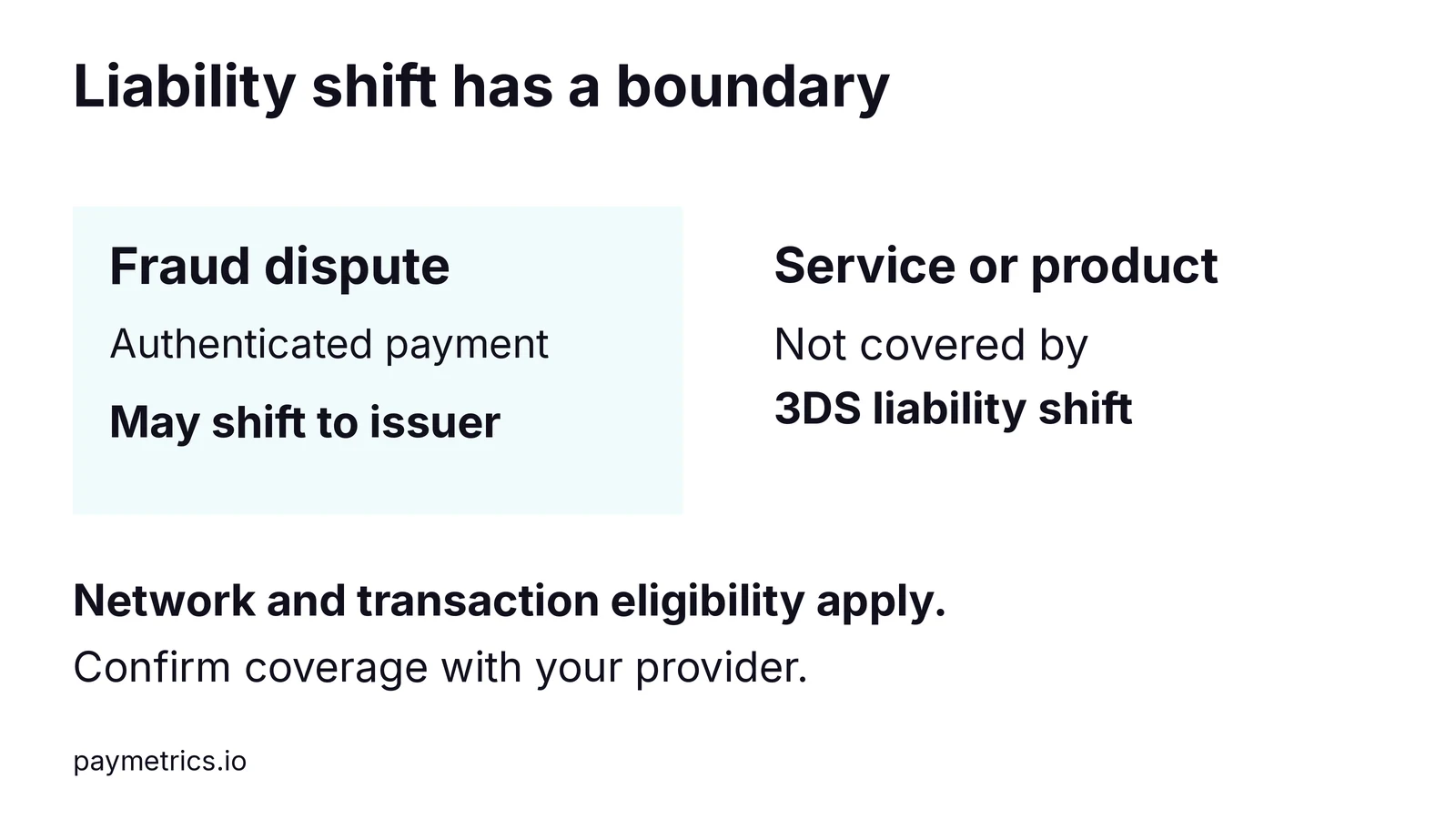
Liability shift moves responsibility for fraud chargebacks from the merchant to the issuer on authenticated transactions. Two conditions apply.
- The transaction must be successfully authenticated, not merely attempted.
- The dispute must be filed under a fraud reason code rather than a service or product code.
What Stays With the Merchant?
Non-fraud disputes stay with the merchant regardless of authentication. That limit is worth understanding before treating 3DS as blanket protection, and the broader dispute picture is covered in what is a chargeback.
When Should You Enable It?
Four situations make a strong case for turning it on.
- Card-not-present fraud disputes are a recurring cost.
- Average ticket size is high enough that a single dispute stings.
- You sell into Europe or the UK, where strong customer authentication is required.
- Your dispute ratio is approaching a monitoring threshold.
Can You Apply It Selectively?
Yes. Most gateways support rules-based triggering, so you can require authentication only above a transaction value, on first-time customers, or on flagged geographies. Selective application is usually better than an all-or-nothing switch.
What Does It Cost?
Pricing varies by gateway and is typically a small per-authentication fee. The real cost to weigh is conversion, since challenged transactions lose some customers at the authentication step.
How Do You Measure the Tradeoff?
Run the comparison over a defined period rather than on instinct. Measure 3 figures: fraud chargebacks avoided, authentication fees paid, and checkout abandonment at the challenge step. The first should exceed the other two combined.
How Does It Fit Alongside Other Controls?
3D Secure is one layer rather than a complete fraud strategy. It pairs with AVS, CVV checks, velocity limits, and clear billing descriptors, all covered in how to prevent chargebacks.
Where Is It Configured?
Gateway configuration determines whether the protocol is available and how granular the rules can be. Our payment gateway solution supports rules-based 3DS, and the underlying technology is explained in what is a payment gateway.
Frequently Asked Questions
Does 3D Secure stop all chargebacks?
No. It shifts liability on authenticated fraud disputes only. Goods-not-received, not-as-described, and subscription disputes remain the merchant’s responsibility regardless of authentication.
Will it hurt conversion?
3DS2 resolves most transactions without customer interaction, so the effect is far smaller than under the original version. Selective rules limit it further by challenging only higher-risk transactions.
Is 3D Secure required?
It is required for most consumer transactions in Europe and the UK under strong customer authentication rules. In the United States it is optional and adopted for the liability shift.
Does it work on mobile?
Yes. 3DS2 was designed for mobile checkout and supports in-app authentication and biometrics, which is where the original version performed worst.
Table of Contents
Subscribe to our newsletter
Get the latest insights and updates delivered to your inbox.

How Does Credit Card Processing Work? A Step-by-Step Breakdown From Our Processing Team
Follow card processing from authorization through clearing, settlement, fees, and deposit in a practical step-by-step guide.
What Is a Chargeback Fee and Who Pays It?
A chargeback fee is an administrative charge assessed to the merchant every time a cardholder disputes a transaction.
How to Choose Recurring Billing Software
Recurring billing software is evaluated on how it handles failed payments, plan changes, and processor flexibility rather than on how the checkout page looks.